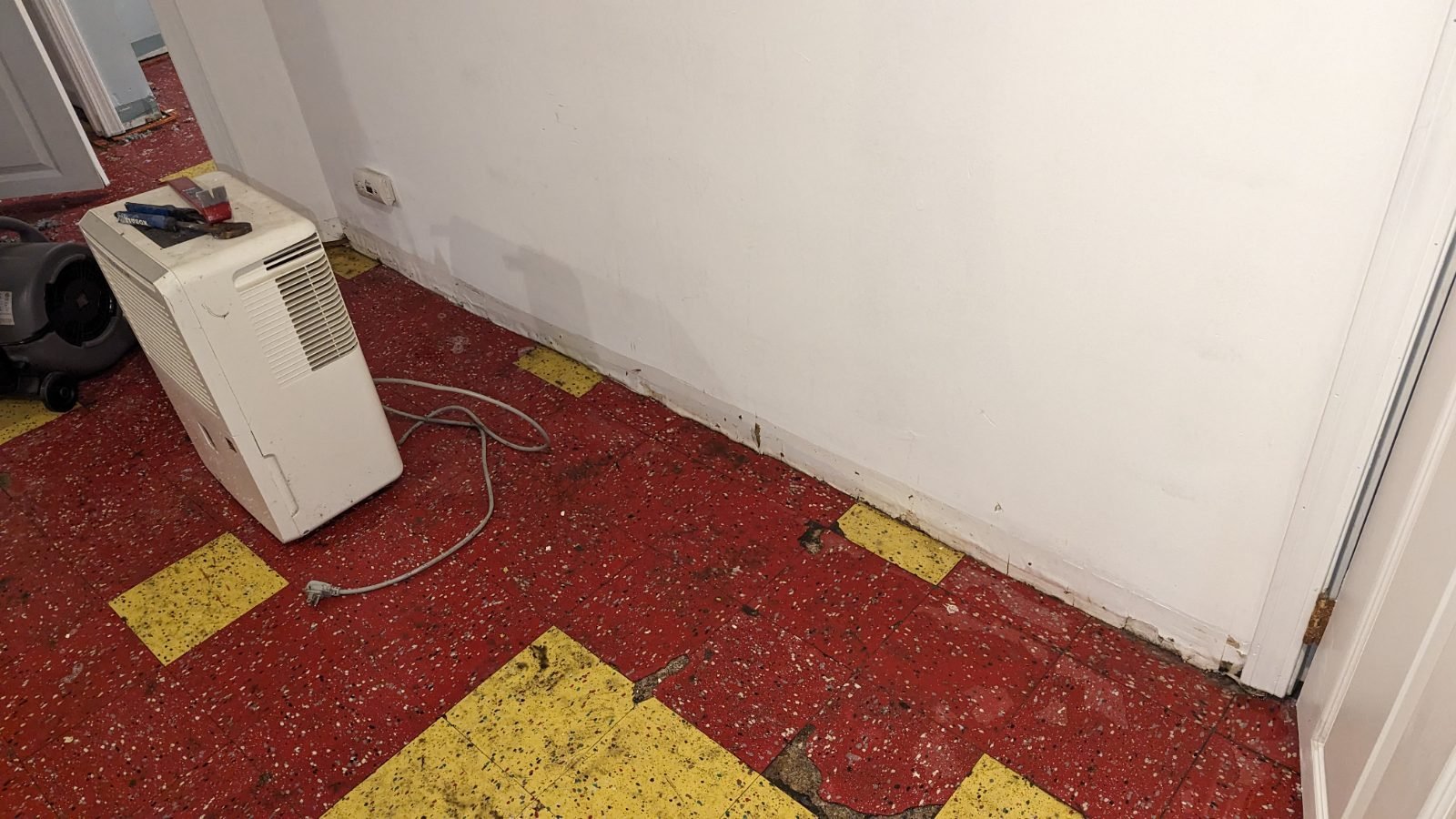
What does emergency water extraction involve?
Emergency water extraction addresses water left by a sudden indoor release. It can include assessing the affected area, removing collected liquid, and identifying materials that need further drying. The first priorities depend on whether water is still entering, where it has spread, and the condition of the water and building.
The term extraction describes removal of liquid water. It is an early part of cleanup, not a promise that the room will be ready for normal use as soon as the visible water is gone.
A sudden release can affect several spaces
A pipe failure or other indoor leak may leave water near its source, across neighboring rooms, or on a lower level. Doorways and floor edges do not necessarily mark the end of the affected area. Water can also enter layers beneath flooring or enclosed building spaces.
That is why the starting point is the event and its spread, rather than the size of one puddle. When a leak involves an apartment or commercial building, nearby units and shared spaces may need consideration along with the room where the problem first became visible.
The first stages of an extraction project
A useful initial assessment separates an ongoing release from the water already inside the property. These issues can require different work, even when they occur together.
Understand the source and conditions
Stopping the source and removing escaped water are separate tasks. A plumbing repair may address a failed pipe, while extraction addresses the water left behind. The water condition and the materials affected also influence the suitable cleanup method.
Remove accessible liquid
Extraction equipment removes collected water from suitable surfaces. Amount, access, and material type affect the approach. Removing liquid limits its continuing contact with the building, but does not reverse damage that has already occurred or remove every trace of absorbed moisture.
Identify the drying that remains
Wet carpet backing, flooring layers, and wall materials may need attention after extraction. Drying can involve air movement and removal of moisture from the air where appropriate. Material condition and moisture assessment help distinguish remaining drying needs from damage that requires repair.
Why prompt assessment matters
Water left in contact with absorbent materials can leave more than a surface cleanup problem. Prompt attention gives the affected areas a chance to be assessed and the appropriate work to begin. There is no universal number of hours that guarantees a finish can be saved.
An extraction-only visit and a complete drying project may have different endpoints. The first may remove liquid and reveal the affected surfaces. The next stage evaluates remaining moisture, materials that cannot stay, and the steps needed before damaged finishes can be repaired.
Request help after a sudden leak
Call with the property location, where water appeared, whether the source has stopped, and a callback number. Current availability and access determine the next step. The amount of water, number of affected spaces, materials, and further drying influence price. For managed properties, include the person who can provide entry and approve the initial work.
Emergency Water Removal questions
When should I request water removal after a sudden leak?
Contact a service provider when you become aware of indoor water damage, especially if water is continuing to spread. You do not need to know every affected area before making a request. Explain the current situation so availability, source-control needs, and the next step can be discussed.
Can removal be discussed while a plumber handles the leak?
Yes. Pipe repair and water removal address different parts of the problem and can be discussed together. The plumbing work concerns the failed source; extraction concerns water already released. How work is sequenced depends on access, the ongoing leak, and the conditions at the property.
Does the room need drying if most water has been removed?
It may. Extraction removes collected liquid, while porous materials and floor layers can retain moisture. The remaining work depends on what got wet and its condition. An apparently clear floor does not, by itself, show that carpet backing, wall materials, or concealed areas are dry.
What if several rooms or units are involved?
Describe all spaces where water has been noticed, including the level below the leak where relevant. A single room name may not describe the whole loss. In a managed building, the owner or manager can help arrange access and share reports from occupants in the affected areas.