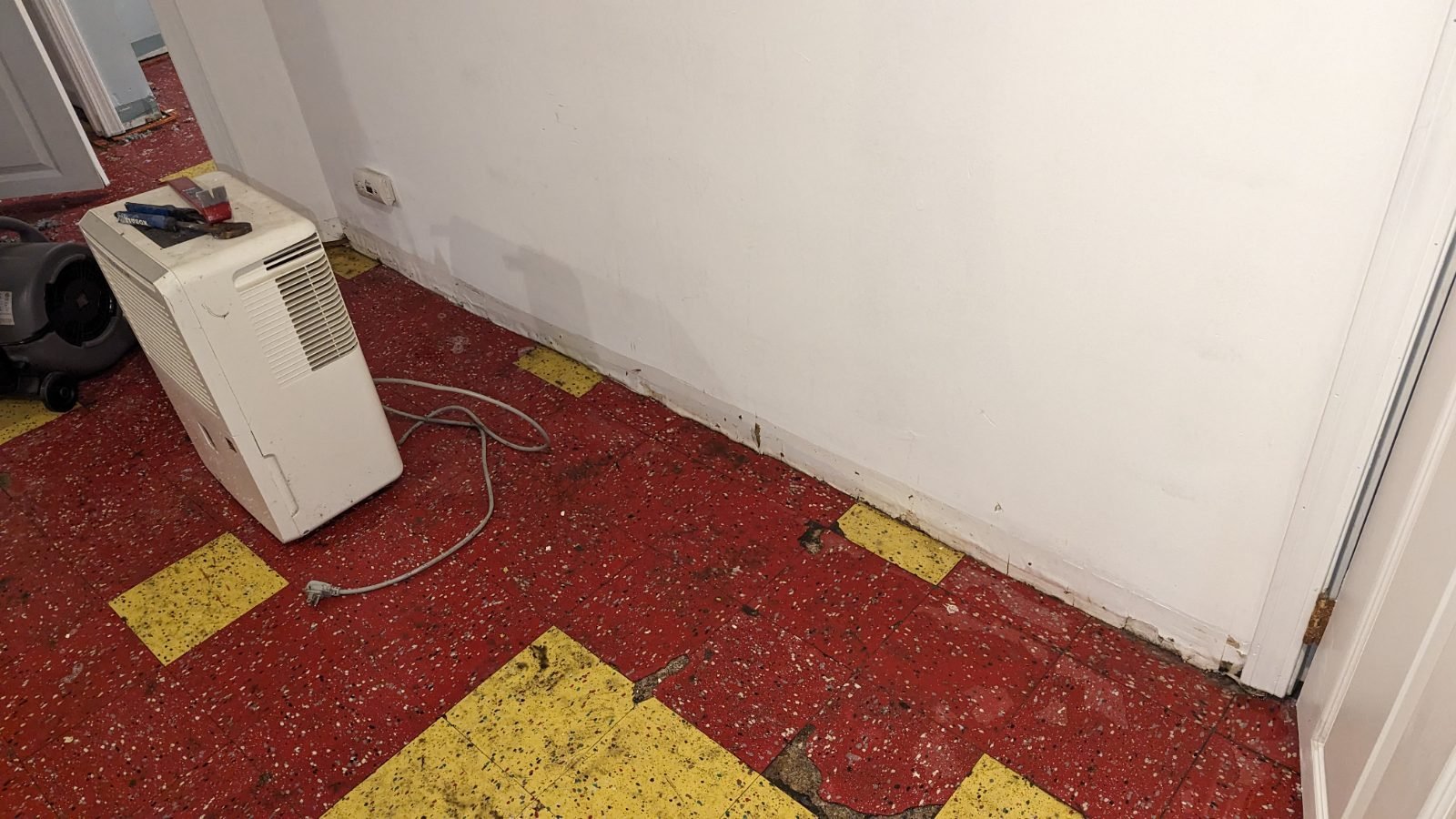
What is included in standing water removal?
Standing water removal deals with liquid collected on floors or in low areas of a building. It can involve extracting that water, checking the materials it reached, and identifying where further drying is needed. Removing the puddle is the first stage; absorbed moisture may remain in flooring, walls, or other materials.
A basement with water on bare concrete presents a different cleanup problem from a finished room with carpet, wallboard, and cabinets. The visible water level is useful information, but the surrounding materials help determine how much work remains after extraction.
Why the wet area can extend beyond the puddle
Water can spread across a floor and collect along its edges, under belongings, or in adjoining low areas. Floor coverings can hide moisture underneath. In a carpeted room, the carpet surface, backing, padding, and floor below are separate parts of the same problem.
The location where water collects may also differ from where it entered. A useful assessment considers the source, the route through the room, and the places where water stopped. A smaller visible puddle does not prove that the rest of the floor assembly stayed dry.
How removal leads into drying
Removal and drying answer different questions: how much liquid can be extracted, and what moisture remains in the building afterward? A typical assessment considers both.
Identify the water and affected materials
The source and condition of the water matter when choosing a cleanup approach. Clear appearance alone does not establish its condition. The assessment also separates exposed hard surfaces from absorbent or layered materials that may hold moisture out of sight.
Extract collected liquid
Water-extraction equipment can remove collected water from suitable surfaces. The method depends on the amount of water, room access, and material involved. Extraction reduces the liquid left in contact with the building; it does not by itself establish that a floor or wall is dry.
Evaluate remaining moisture
Drying may involve controlled air movement and dehumidification where appropriate. Moisture checks help evaluate wet building materials rather than relying only on appearance. The result may be a drying plan, material removal where necessary, or a combination based on the conditions found.
Bare floors and finished rooms need different attention
On an exposed concrete floor, removal can reveal the surface directly. In a finished basement, flooring, trim, wall coverings, and built-in features can limit access to damp areas. Water at the edge of a room may affect more than the floor covering alone.
Material condition also matters. Some clean-water-damaged wallboard may be suitable for drying in place when it remains intact; swollen or damaged material can require a different approach. No single removal method can guarantee that every finish will be saved.
Request removal for your property
Include the Minneapolis location, affected rooms, whether more water is entering, and the best contact person. Pricing depends on the extent of water, access, material condition, and any further drying. For a rental or managed building, identify who can provide entry and authorize work. A written estimate should distinguish water removal from drying and later repairs.
Standing Water Removal questions
Is standing water removal the same as drying a basement?
No. Removal addresses liquid collected on surfaces. Drying addresses moisture remaining in materials and the surrounding air. A basement can have no visible puddles while flooring or wall materials remain damp. Whether further drying is needed depends on the affected materials and their condition.
Can a shallow puddle affect flooring underneath?
Yes, a small visible amount can still reach the layers below a floor covering or the edges of a room. Depth alone does not establish the extent of damage. The type of floor, how water entered, and the areas it reached help explain the work needed.
What if I do not know where the water came from?
You can describe what you see without naming a cause. Include where water first appeared and whether the amount is changing. Identifying an ongoing source matters because removal alone cannot resolve water that keeps entering. Source investigation or repair may need to be handled separately.
Will removal automatically include replacing damaged finishes?
Replacement is a separate part of returning a room to use. Some materials may remain in place for drying; others may need removal because of their condition. The estimate should make clear whether it covers extraction, drying, material removal, or any later repair work.