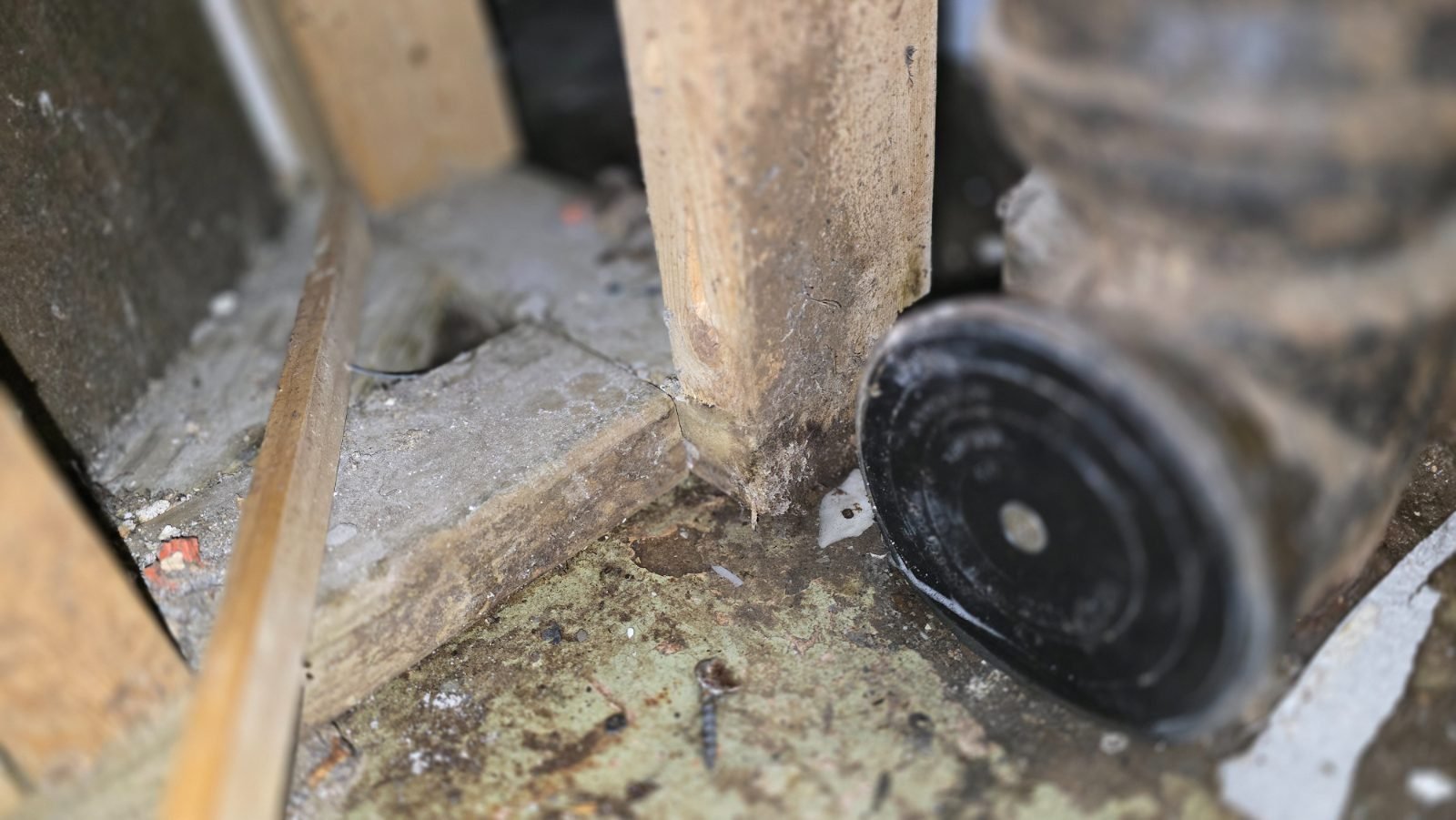
What is included in burst pipe water damage cleanup?
Burst pipe water damage cleanup addresses the water and building materials affected by a pipe break. It can involve removing escaped water, assessing where moisture traveled, and drying suitable materials. Repairing the broken plumbing is a separate task, and damaged finishes may need further repair after cleanup and drying.
The visible leak is only part of the problem. A pipe behind a wall or above a ceiling can release water into enclosed spaces before it appears in the room. The cleanup area therefore may be larger than the location of the plumbing repair.
Follow the damage beyond the pipe break
The first wet patch does not always mark the source or the full extent of the water. Moisture can be present behind wall coverings, around pipe routes, beneath floor coverings, or on the level below. A room-by-room review helps connect these observations to the same event.
For example, a break on an upper floor may involve both the floor around the pipe and the ceiling beneath it. Those are different building assemblies, with different access and material conditions. Treating only the most obvious surface can leave another affected area unaddressed.
How pipe repair, removal, and drying fit together
The work can be understood as three related stages. The order and overlap depend on the property, but each stage solves a different part of the loss.
Address the failed plumbing
Repair deals with the reason water escaped. A repaired pipe does not remove water that has already reached the building. Information about the break location and when flow stopped can help explain where cleanup assessment needs to begin.
Remove water and evaluate wet materials
Collected water can be extracted where appropriate. The assessment also considers absorbent materials, concealed layers, and visible damage. Intact material affected by clean water may have different options from material that is swollen, separated, or otherwise unable to remain in place.
Dry what can remain
Drying focuses on moisture in retained building materials. Air conditions and the materials themselves provide different information, so the appearance of a room alone is not a completion measure. Later finish repair should be distinguished from the work needed to address residual moisture.
Why walls and floors may need different approaches
A wall combines coverings, framing, and sometimes insulation; a floor may combine a finish, backing, and subfloor. Water can affect these layers unevenly. Access to one side does not automatically reveal the condition of everything behind it.
Some materials can be considered for drying in place, while others need removal because of their condition or the water involved. That decision belongs to a property-specific assessment. Burst pipe cleanup should not assume that every wet surface must be replaced, or that every material can be saved.
Request cleanup after a pipe break
Share the Minneapolis address, break location if known, affected rooms or levels, and whether the plumbing has been addressed. Extent, access, materials, and drying needs influence price. For a rental or commercial property, provide the manager or owner contact who can arrange entry. The estimate should separate plumbing, cleanup, drying, and later repairs where applicable.
Burst Pipe Water Damage Cleanup questions
Does this request include repairing the broken pipe?
This page concerns the damage left by escaped water. Plumbing repair is a separate responsibility and should be arranged with an appropriate provider. If a plumber is already involved, sharing the break location and repair status can help connect the source work with the cleanup needs.
Why is the ceiling below the leak relevant?
Water from a pipe break can reach a different level before the full extent becomes visible. The floor above and ceiling below may both be affected. Their materials and access differ, so the assessment may need to consider both sides rather than only the first visible stain.
Will every wet wall or floor need replacement?
Not necessarily. The material, water condition, extent of wetting, and visible damage affect that decision. Some intact materials may be suitable for drying in place; other materials may not be. A general description of a pipe break cannot establish what can be retained at a particular property.
Can damage remain after the pipe is repaired?
Yes. Repairing the pipe addresses the source, while water already released can remain in floor layers, walls, or other spaces. Cleanup and drying deal with that remaining water. Finish repairs are another step and may still be needed even when the moisture problem has been addressed.